A precise, movement-based modality designed to locate chronic physical restrictions, un-lock the fascia lines, and restore your body’s natural alignment.
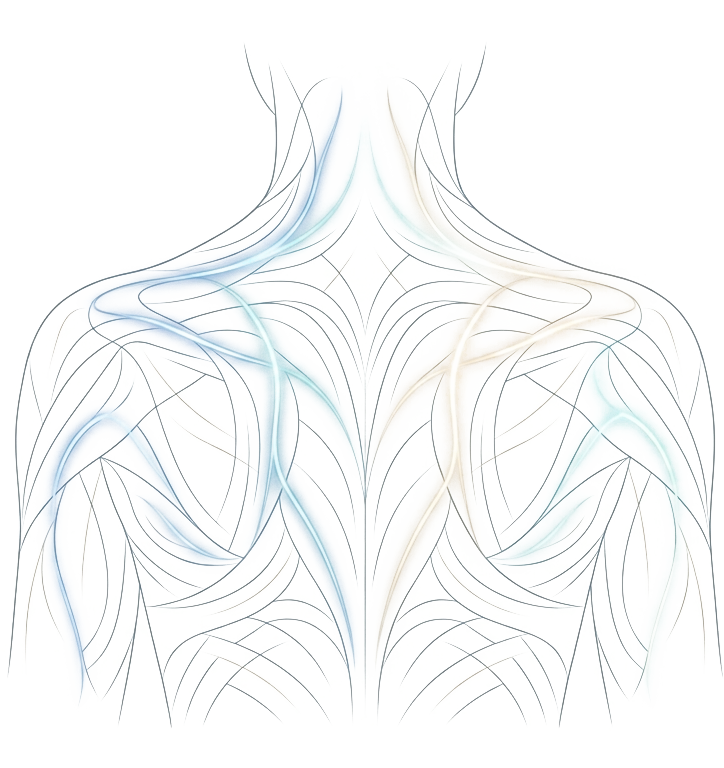
Most chronic pain isn’t an injury—it’s a pattern. When your body experiences stress, repetitive movements, or poor posture, your fascia lines lock up to protect you. Over time, these tight bands pull your entire skeleton out of alignment, causing persistent pain in your back, neck, shoulders, and joints.
Instead of just treating the symptom where it hurts, we look at the whole picture. By systematically identifying and releasing these locked fascia lines, we eliminate the structural pull, giving your nervous system a chance to reset and your body a chance to move entirely pain-free.
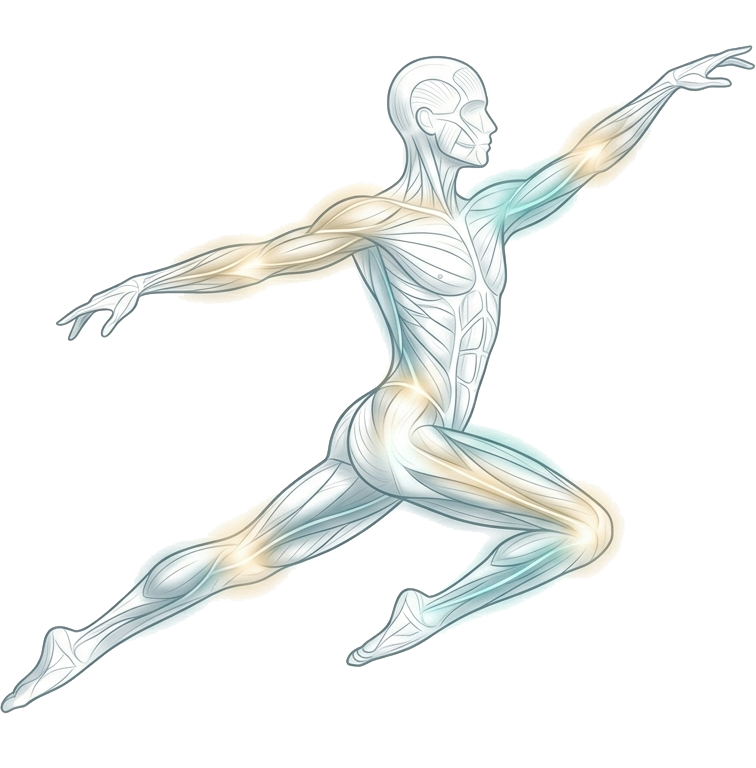
Peak performance requires complete biomechanical freedom. When you train intensely, run, or dance, repetitive strain causes subtle micro-locks in your fascia lines. You might not feel them as intense pain, but you will notice them as a sudden plateau in your progress, a loss of flexibility, or recurring minor strains that keep you sidelined.
The Lyno Method acts as a precision diagnostic tool for your movement. By analyzing your active range of motion, we find exactly where your alignment is blocked. Releasing these hidden restrictions restores full power to your muscles, maximizes your efficiency, and keeps your body resilient against training injuries.
Your journey to unrestricted movement begins with a comprehensive, full-body assessment. During your first session, we conduct a series of precise range-of-motion tests to scientifically map out exactly where your fascia lines are locked. You will remain fully clothed in comfortable athletic wear throughout the assessment and release.
Once the restrictions are identified, we use a gentle, localized pressure technique along the specific fascia lines to guide your body back into alignment. Because the Lyno Method works with your nervous system rather than forcing muscle tissue, the process is entirely non-invasive, structured, and focused on long-term structural freedom.